

If you just want an API Key, visit your account’s API Keys page to create and manage your keys. Follow our API quickstart here.
Classify is available via the API but is not yet integrated into Studio. You can try it interactively at classify.reducto.ai.
1. Visit Studio
Sign-up or log-in at studio.reducto.ai. If you’re the first to sign-up from your organization, you’ll be asked to create and set a name for the organization. You should then land on the Studio home page. New organizations see two starting points: Build with Reducto, which creates an API key for code or agent workflows, and Start with a document, which uploads a file or picks a sample. You can also click Create pipeline to configure one yourself.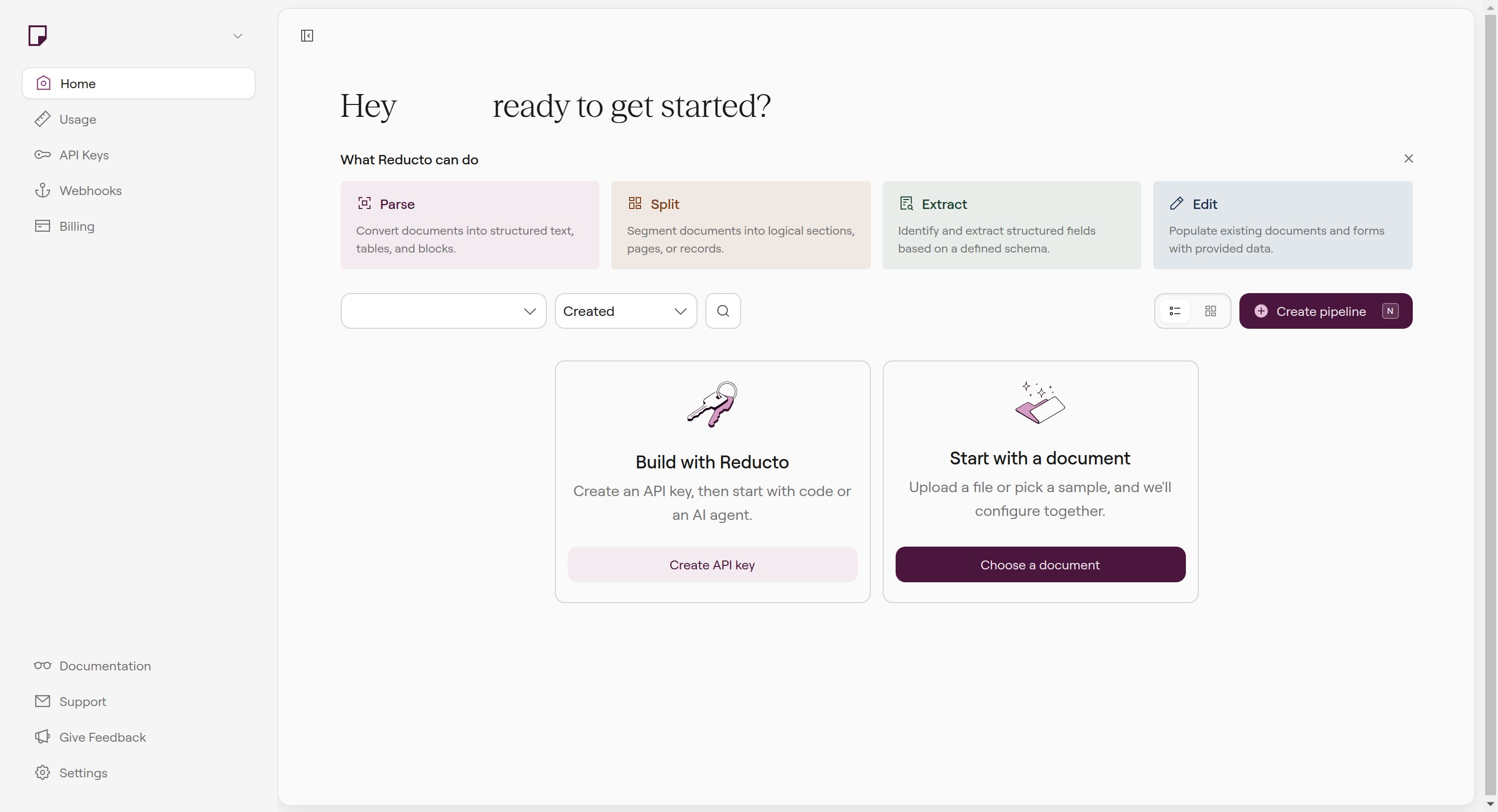
2. Create an Extract Pipeline
The goal here is to upload a document and see the structured output Reducto produces. Extract reads your document, and extracts the data you want in a schema shape you define.1
Create a new pipeline
Click Create pipeline, and select Extract.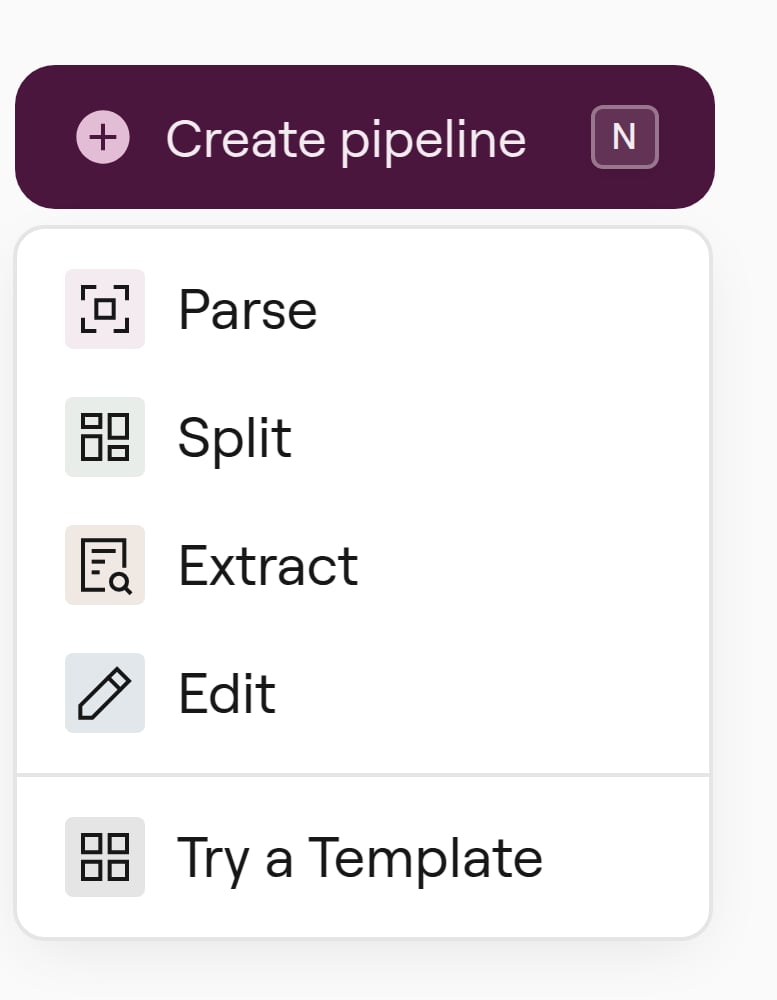
2
Upload a document
Drag and drop a file or upload directly.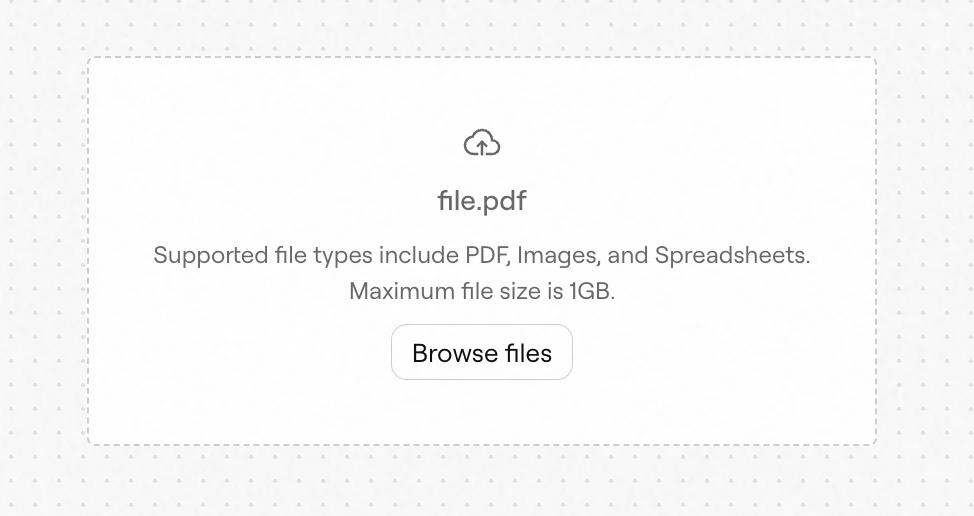
3
Generate a JSON schema
Hit Generate and then choose between Fast and Enhanced mode. You can use natural language to describe what type of data you want to extract from your document.Reducto will automatically create a well formed schema for you. Alternatively, you can manually configure your schema by building one in the schema builder directly.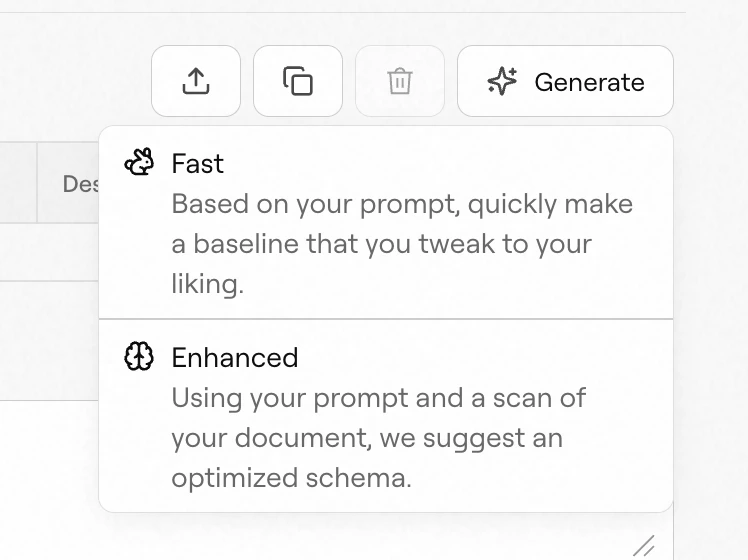
4
Run the pipeline
Hit Run. Once the pipeline is done, the Results tab will contain the Extract results.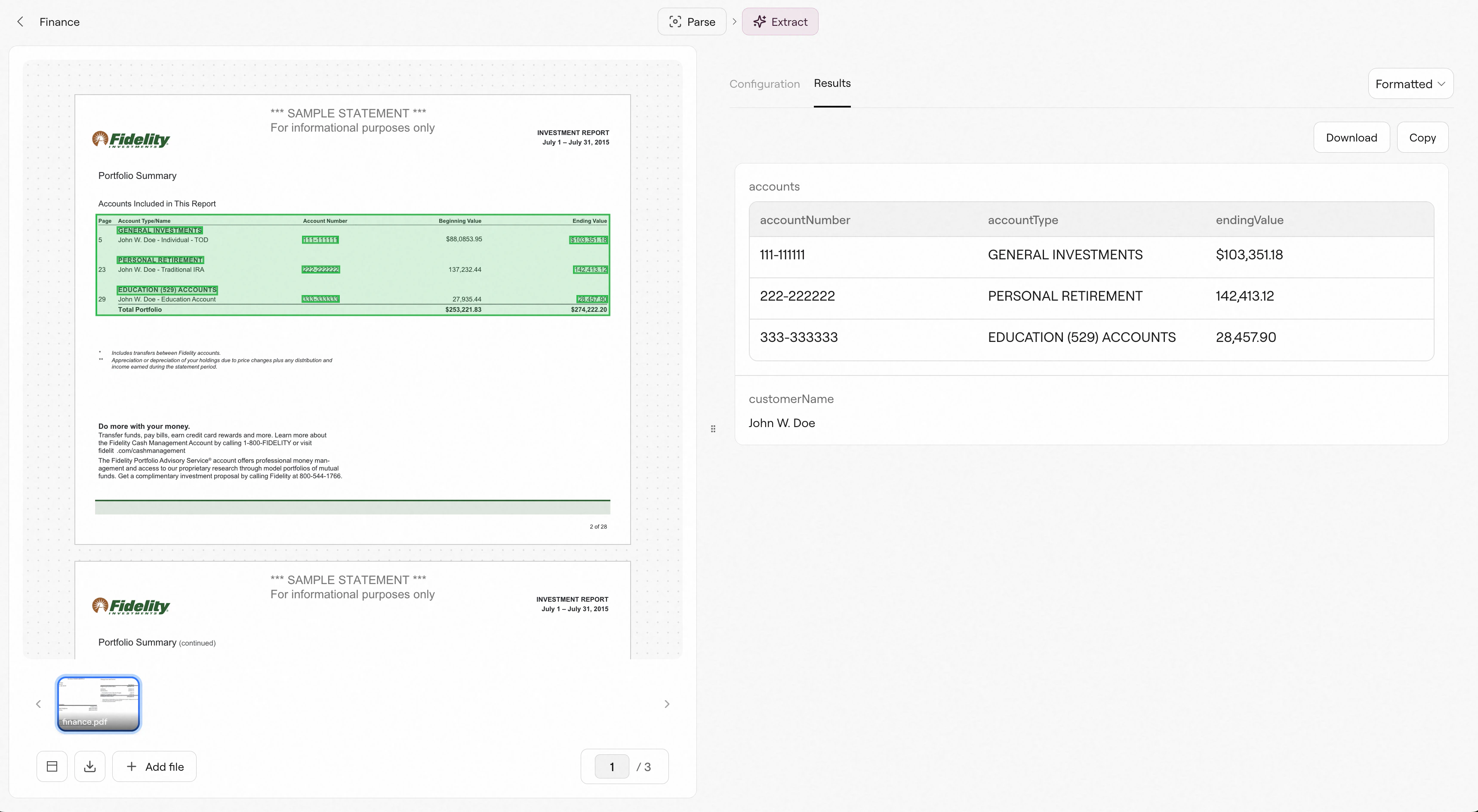
3. Create an API Key
Once you’re ready to move into production, go back to the homepage and hit API Keys. Here you’ll be able to create, manage, and edit your account’s API keys.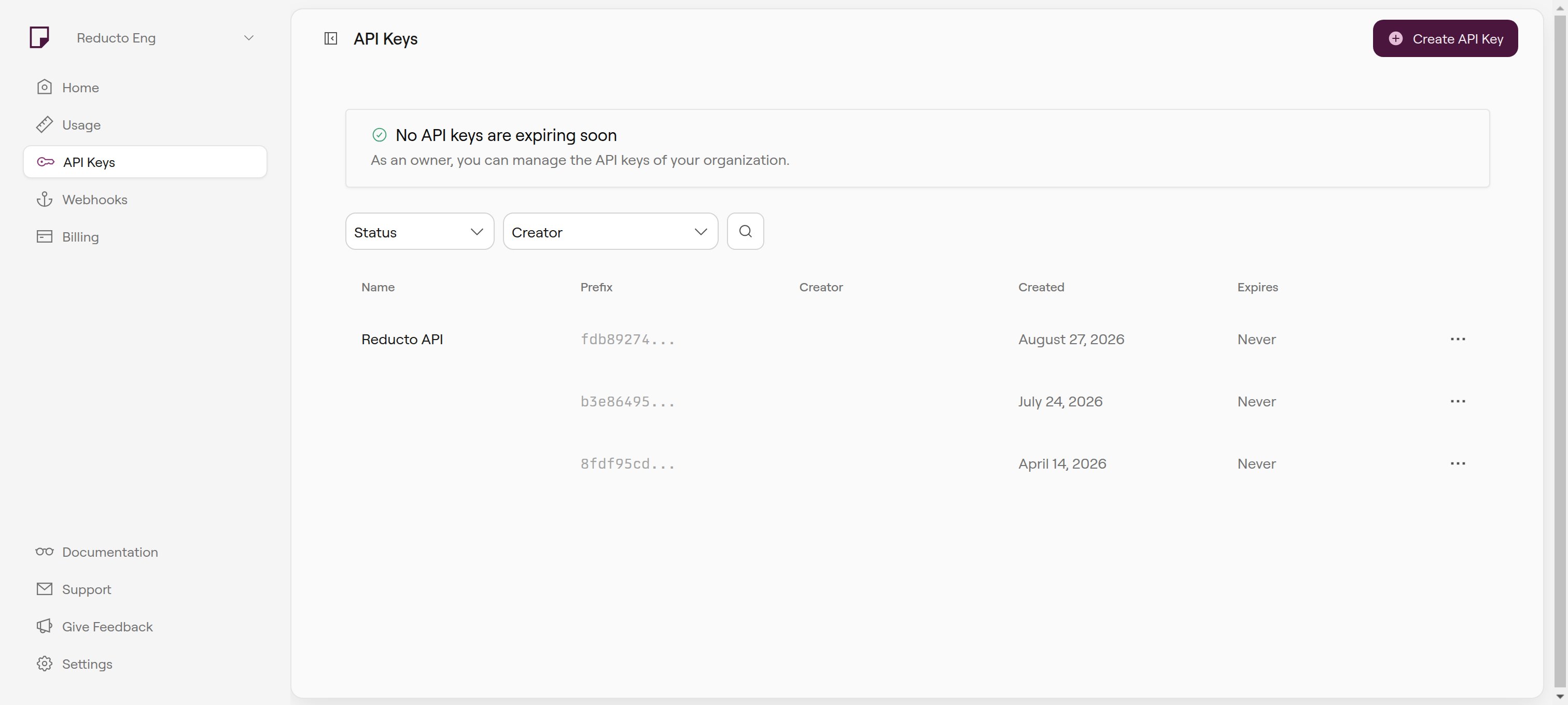
Next steps
API Quickstart
Learn how to use Reducto’s SDKs to call your pipelines in production.
Extract Pipeline
Define JSON schemas to pull structured data from documents, with automatic field detection and confidence scoring.
Reducto CLI Quickstart
Learn how to use Reducto’s CLI to easily let agents use our endpoints.
Deploy to Production
Learn how to Deploy your pipeline with a Pipeline ID.